8 Benefits of Whiteboards in a Classroom
At Swift Enterprises OPC, we’ve provided top-quality school and office supplies, including whiteboards, to educators and institutions. Through our experience, we’ve seen how whiteboards transform classrooms by enhancing teaching methods and supporting the teacher’s own learning process. But what makes whiteboards so impactful? Let’s dive into their benefits in a classroom setting.
The benefits of whiteboards in learning are numerous for both teachers and students. They enhance engagement by allowing real-time interaction, promote better organization of ideas, and support visual learning. Whiteboards encourage active participation from students, facilitate collaborative learning, help clarify complex concepts, and provide flexibility for teachers to adjust lessons as needed.
Let’s discuss these 8 benefits below, plus a bonus on with the emergence of digital or interactive whiteboards.

1. Encourages Interactive Teaching
Whiteboards are a powerful tool for creating engaging lessons that captivate students’ attention. With the ability to incorporate visual aids, diagrams, and drawings, teachers can present complex information in a way that’s easier to understand.
Visuals help simplify abstract concepts, making them more relatable and memorable for students, especially in subjects like math, science, and language arts.
Additionally, whiteboards allow teachers to adapt lessons in real-time based on student feedback and responses.
If students are struggling with a particular topic, a teacher can instantly adjust the lesson, revisit difficult concepts, or even create additional examples.
This flexibility promotes a more interactive and personalized learning experience, making students feel involved in their own learning process.
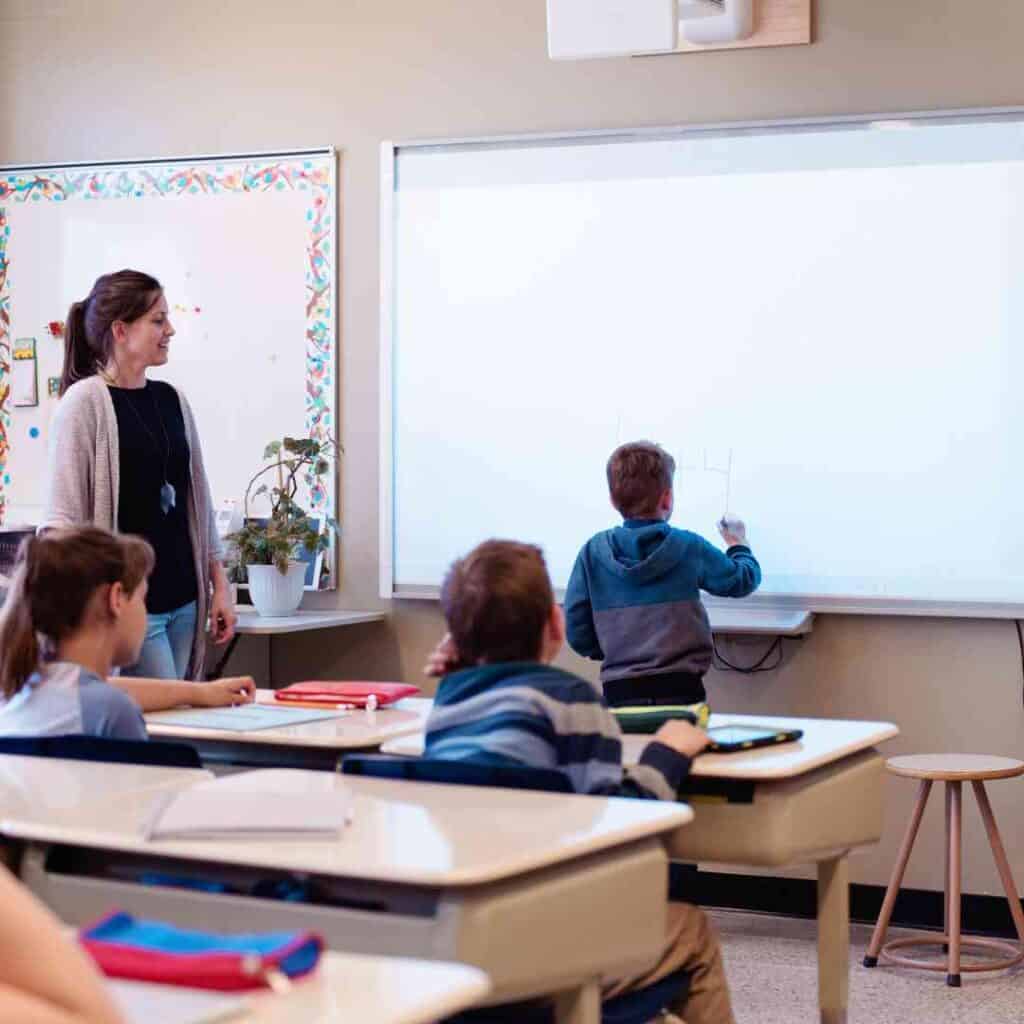
The interactivity extends beyond the teacher’s ability to adjust content. Students can be invited to come up to the whiteboard to demonstrate their understanding, solve problems, or contribute ideas.
This hands-on involvement enhances student engagement, boosts confidence, and fosters collaborative learning among peers. By incorporating whiteboards into teaching, educators create a dynamic classroom environment that encourages participation and fosters a deeper connection with the material.
Recommended Read: For a blog post discussing whiteboard accessories you can use to further enhance productivity, please check this post: Whiteboard Accessories for Enhanced Productivity.
2. Enhances Teacher-Student Collaboration
Whiteboards are excellent tools for fostering group discussions and collaborative problem-solving in the classroom.
Teachers can use the board to write down student ideas, solutions, and feedback, which allows the entire class to engage in the thought process together.
This promotes a sense of shared responsibility for the lesson, as everyone contributes to the learning experience. Group work on the whiteboard encourages peer-to-peer learning, where students can explain concepts to one another and help solve problems collectively.
By visualizing the discussion and writing down key points, teachers can better track the flow of ideas and direct the conversation toward a deeper understanding.
This real-time collaboration allows the teacher to gauge the class’s comprehension and make adjustments to the lesson as needed. For instance, if a group is struggling with a specific aspect of the lesson, the teacher can quickly adapt the discussion or add supplementary information to address misunderstandings.
Additionally, whiteboards give teachers the opportunity to learn from their students’ perspectives. When students offer their solutions, suggestions, or ways of thinking, teachers gain valuable insights into their thought processes.
This can help the teacher recognize which teaching methods are working and which may need adjustment. The collaborative nature of whiteboards makes the classroom environment more fluid, where learning is a two-way street, with both teachers and students actively shaping the lesson.

3. Supports Visual Learning
Whiteboards provide an excellent platform for teachers to simplify complex concepts through visuals like charts, graphs, and diagrams. By drawing these on the board, teachers can break down intricate topics, such as equations or scientific processes, into manageable, visual steps that students can easily follow and comprehend.
In addition to aiding students, using visuals on a whiteboard also helps reinforce the teacher’s own understanding of the material.
As teachers draw connections between different concepts, they can ensure their explanation is clear, adjusting it as needed to ensure better comprehension for all students in the class. This process fosters a deeper understanding for both the teacher and students.
Furthermore, visual learning strategies cater to a diverse range of learners. For visual learners, seeing concepts laid out on a whiteboard can significantly enhance their grasp of the material, making it easier to absorb and retain information. Using visuals as part of the lesson allows teachers to engage students in a way that complements their individual learning styles, ultimately contributing to better educational outcomes.
4. Promotes Creativity in Lesson Delivery
Whiteboards provide teachers with a versatile space to experiment with different teaching techniques, allowing them to adapt and refine their approach based on student needs. The dynamic nature of whiteboards makes it easy to illustrate complex concepts in real time, offering teachers the freedom to try new methods and adjust their lessons on the fly. This flexibility encourages teachers to think creatively in their delivery, helping maintain student interest and engagement.
For example, teachers can use whiteboards for brainstorming sessions, where ideas are visualized and expanded upon collectively.
This open and interactive process fosters a collaborative learning environment, encouraging students to contribute their thoughts and develop critical thinking skills. Through the use of whiteboards, teachers can turn lessons into creative experiences that actively involve students in the learning process.
Interactive storytelling is another example where whiteboards shine. Teachers can visually map out story elements, character developments, and plot structures as they narrate a story, keeping students engaged and helping them follow along more easily.
This not only makes learning more exciting but also allows students to see the connections between ideas, enhancing their creativity and understanding of the subject matter.
Recommended Read: You can get more benefits in using whiteboards if you use the right techniques. I created a blog post discussing that here: Whiteboard Techniques and Strategies for effective use.
5. Provides Immediate Feedback
One of the key advantages of using whiteboards in the classroom is the ability to provide immediate feedback.
Teachers can quickly identify areas where students may be struggling and address misunderstandings during the lesson, rather than waiting until later. This immediate correction helps students stay on track and ensures that they are building their knowledge accurately.
Additionally, whiteboards create opportunities for real-time Q&A sessions. Teachers can write down student responses or questions and immediately offer clarification or further explanation. This constant back-and-forth keeps students engaged and ensures that their learning process is dynamic and responsive.
The immediacy of feedback fosters a more interactive and participatory classroom environment, ultimately enhancing student comprehension and retention.
6. Aids in Organization and Planning
Whiteboards are an invaluable tool for teachers when it comes to organizing and planning lessons. Teachers can outline key topics, objectives, and the flow of the lesson visually, ensuring they stay on track and are able to effectively communicate the material to students.
By breaking down lessons into manageable sections on the whiteboard, teachers can easily adjust their teaching strategies as needed, based on the students’ responses and needs.
Using grids or templates on the whiteboard further helps in structuring lessons. These templates allow teachers to organize their content in a clear, logical format, such as timelines, comparison charts, or steps in a process.
This approach not only aids in delivering structured lessons but also helps students follow along and absorb the material more easily. Grids or templates can be reused or modified in subsequent lessons, enhancing the overall organization of the classroom.

7. Offers a Hands-On Learning Experience for Teachers
Using a whiteboard provides teachers with a hands-on approach to teaching that enhances their own understanding of the material. Writing, drawing, and erasing allow teachers to actively engage with the content, reinforcing their knowledge and internalizing key concepts as they explain them.
This physical interaction with the subject matter can help teachers process complex ideas more effectively and prepare for better lesson delivery.
The act of physically engaging with the whiteboard also aids in lesson delivery by allowing teachers to think through and refine their ideas in real time.
As teachers write or draw out examples, they may come up with new insights or ways of explaining concepts that they hadn’t considered before. This dynamic approach helps teachers adapt to the learning pace and needs of their students, fostering a more responsive and effective teaching environment.
8. Saves Time with Multi-Functional Use
Whiteboards are a versatile tool in the classroom, allowing teachers to seamlessly switch between note-taking, demonstrating concepts, and writing reminders. This multi-functional capability saves time by reducing the need for additional tools or materials.
Teachers can quickly switch between tasks without needing to set up or find other resources, enabling them to focus more on teaching and less on preparation.
By using the whiteboard for various classroom activities, teachers can streamline their workflow and make the most out of limited time during lessons.
Whether outlining a key point, solving problems in real-time, or taking quick notes during discussions, the whiteboard serves as an all-in-one resource that helps teachers stay organized and efficient throughout the lesson. This time-saving aspect allows for more flexible teaching and enhances overall classroom productivity.

Bonus: Enhances Learning with Interactive Whiteboards
Interactive whiteboards (IWBs) take the traditional whiteboard to the next level by incorporating technology that allows teachers to engage students in more interactive and dynamic lessons.
With features like touch-sensitive screens, multimedia integration, and the ability to display interactive content, IWBs make learning more engaging and accessible.
Teachers can use interactive whiteboards to display videos, animations, and simulations that reinforce the lesson material, making complex concepts easier to grasp.
For instance, in subjects like science or mathematics, IWBs can visually demonstrate processes, such as chemical reactions or mathematical equations, allowing students to interact with the content directly. This hands-on engagement enhances students’ understanding and retention of the material.
Furthermore, IWBs enable teachers to incorporate real-time feedback and interactive quizzes, offering immediate assessment and promoting active student participation. This responsiveness encourages greater interaction and collaboration, fostering a mor