Magnetic vs. Non-Magnetic Whiteboards: Which Should You Choose?
When deciding between magnetic and non-magnetic whiteboards, it’s easy to feel overwhelmed by the options. We understand that choosing the best fit for your office can be challenging, especially with various features and benefits to consider. Each type has unique advantages that cater to different needs, so finding the right one can make all the difference in daily productivity.
Magnetic whiteboards are ideal for versatile workspaces, allowing users to attach notes, magnets, and accessories directly to the board. In contrast, non-magnetic whiteboards are for simpler setups focused solely on writing and erasing. However, both options have unique strengths—choosing the best fit depends on your specific office needs and preferences.
In this post, we’ll break down the key differences, advantages, and potential drawbacks of each type to help you make an informed decision. Whether you’re aiming for added functionality or a simpler setup, we’ll guide you through the pros and cons to find the best whiteboard for your workspace needs.

What Is a Magnetic Whiteboard?
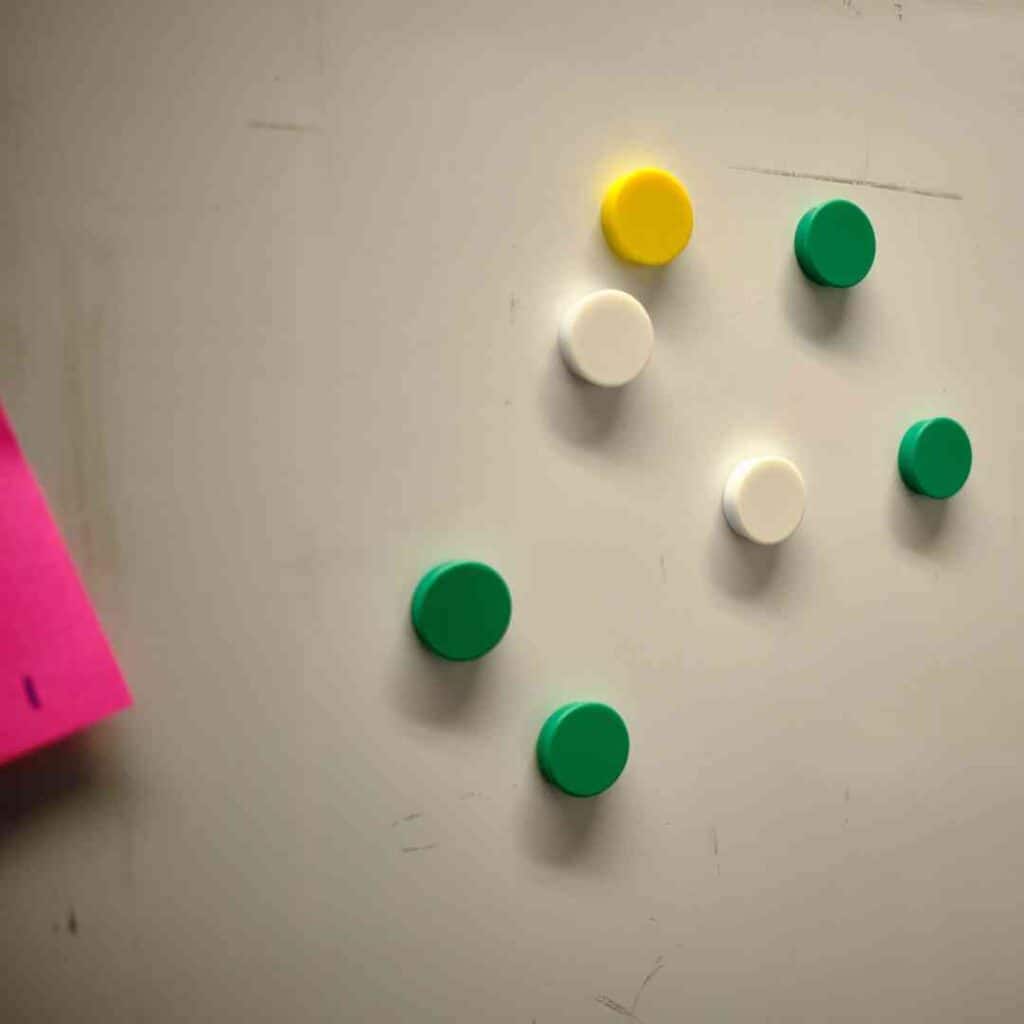
A magnetic whiteboard is a type of dry-erase board that combines the functionality of a writing surface with the ability to hold magnetic items. It works through a core material—often steel or a magnetic surface layered beneath the writing surface—that enables magnets to stick to it.
The magnetic feature provides added versatility, allowing users to attach documents, notes, and reminders directly to the board, making it highly useful in offices, classrooms, and conference rooms where visual aids and quick access to information are essential.
The materials used in magnetic whiteboards are typically a blend of steel or other ferromagnetic metals layered with a smooth, erasable coating.
The top surface may be made from painted steel, porcelain, or tempered glass, each offering different levels of durability and erasability. Painted steel boards are more affordable, though prone to minor ghosting over time.
Porcelain boards are highly durable, resist stains, and are more resistant to scratches, while glass magnetic boards provide a sleek, modern look with smooth erasability and minimal ghosting.
Magnetic whiteboards have a broad range of applications due to their added functionality. In educational settings, they allow teachers to display visual aids, notes, and reminders that can be quickly swapped out.
In offices, magnetic whiteboards serve as effective planning and collaboration tools, as employees can attach charts, graphs, and schedules to support brainstorming and project tracking. Even in home offices, magnetic boards help organize personal tasks, display family schedules, and hold lists or documents.
Overall, magnetic whiteboards provide a robust solution for anyone looking to create a dynamic workspace. The dual-purpose design supports both visual display and writing functions, making it a popular choice for environments where information sharing and organization are crucial.
What Is a Non-Magnetic Whiteboard?
A non-magnetic whiteboard is a type of dry-erase board designed solely for writing and erasing, without any magnetic properties. Made from materials like melamine, laminate, or plastic, these boards provide a smooth, writable surface that’s ideal for everyday use in schools, offices, and home settings.
Non-magnetic whiteboards are often more affordable than their magnetic counterparts, making them a practical option for those who primarily need a basic writing surface without the additional functionality of holding magnets.
The materials used in non-magnetic whiteboards are typically lightweight and cost-effective, with melamine being one of the most common.
Melamine boards are smooth and writable, but they can be prone to staining or “ghosting” over time, as the dry-erase markers may leave faint residues that are hard to fully erase. Laminate and plastic options provide a similar surface but may also wear down over extended use, making them better suited for light to moderate use rather than high-traffic environments.
One of the limitations of non-magnetic whiteboards is their limited functionality. Unlike magnetic boards, which can serve as both writing and display surfaces, non-magnetic boards are confined to being writable surfaces only.
This can be a drawback in settings where it’s helpful to attach documents, charts, or notes for quick reference, as users must rely on other methods, like clips or pins, to display additional information.
Because of this limitation, some of our customers buy a corkboard for this purpose. We also get job orders of double sided whiteboards, with a non-magnetic/magnetic whiteboard on one, and corkboard on the other side.
Additionally, because many non-magnetic boards use melamine or laminate surfaces, they may require more frequent cleaning and maintenance to preserve their appearance and usability.
Despite these limitations, non-magnetic whiteboards are highly popular for their simplicity, affordability, and lightweight design. They’re an excellent choice for classrooms, small meeting rooms, or personal spaces where users need a reliable surface for writing and note-taking without the need for extra features. For those who require a straightforward, budget-friendly option for basic whiteboard functions, non-magnetic whiteboards provide a suitable solution.
Recommended Read: Do you know the history of Whiteboards? Ordinary whiteboards are invented in the 1950s while magnetic whiteboards are invented in the 1980s. To know the full history of whiteboards, you may check our post here: Complete History of Whiteboards

Key Differences Between Magnetic and Non-Magnetic Whiteboards
| Feature | Magnetic Whiteboards | Non-Magnetic Whiteboards |
| Versatility | Allows use of magnets to hold papers, documents, and accessories, ideal for presentations and organization. | Limited to writing; lacks functionality for holding attachments. |
| Compatibility with Accessories | Compatible with a wide range of accessories, including magnetic markers, erasers, and document holders. | Limited to traditional accessories like markers and erasers; cannot support magnetic attachments. |
| Cost | Higher initial cost due to addition of Magnet or steel; offers long-term value due to durability. | Budget-friendly option, especially for short-term or low-use needs; typically made from affordable materials like melamine. |
| Weight | Heavier due to materials like steel or porcelain; often mounted permanently in high-use environments like classrooms and offices. | Lightweight and easy to move or install; ideal for portable or temporary setups in smaller or personal spaces. |
1. Versatility
- Magnetic Whiteboards: The magnetic surface allows you to use magnets to hold up papers, documents, or accessories, making them multifunctional for tasks like presentations and organization. This is especially helpful in classrooms and offices where visual aids or notes need to be displayed.
- Non-Magnetic Whiteboards: While they serve as writing surfaces, non-magnetic boards lack the additional functionality of holding magnets. They are best suited for simple note-taking and brainstorming where attachments aren’t necessary.
2. Compatibility with Accessories
- Magnetic Whiteboards: Magnetic boards are compatible with a wide range of accessories, such as magnetic markers, erasers, and document holders. This compatibility makes them more versatile for dynamic uses, especially in professional and educational settings.
- Non-Magnetic Whiteboards: Limited to traditional accessories, non-magnetic boards can still be used with standard markers and erasers but don’t support magnetic attachments.
3. Cost
- Magnetic Whiteboards: These tend to be more expensive because of the materials required to create a magnetic surface, such as steel or porcelain. The initial investment may be higher, but magnetic boards often provide long-term value due to their durability.
- Non-Magnetic Whiteboards: Generally more budget-friendly, non-magnetic whiteboards are an economical choice for short-term or low-use situations. Melamine, commonly used in non-magnetic boards, is cheaper but wears out faster.
4. Weight
- Magnetic Whiteboards: Magnetic whiteboards, especially those made with materials like steel or porcelain, tend to be heavier. The added weight comes from the metal layers required to create a magnetic surface, which adds to their durability but can make them more challenging to install or move. Due to their weight, magnetic boards are often mounted permanently in classrooms, offices, or conference rooms.
- Non-Magnetic Whiteboards: Generally lighter than magnetic options, non-magnetic whiteboards made from materials like melamine or laminate are easier to handle, install, and move. This lightweight design makes them ideal for portable or temporary setups, like in small offices or home environments where mobility is beneficial.
Pros and Cons of Each Type
| Type | Pros | Cons |
|---|---|---|
| Magnetic Whiteboards | – Versatility: Can hold magnets for attaching notes and documents; ideal for presentations. – Durability: Usually made from high-quality materials like porcelain or painted steel; resists scratches, stains, and ghosting. – Variety of Sizes: Available in various sizes to meet different space requirements. – Easy to Clean: Non-porous surfaces allow for easier cleaning and maintenance. | – Higher Cost: More expensive due to materials and construction; larger initial investment. – Weight: Heavier, making them cumbersome to install and move; often require wall mounting. – Limited Availability: Not all sizes or styles may be available. |
| Non-Magnetic Whiteboards | – Affordability: Generally more budget-friendly, making them ideal for casual or low-use environments. – Lightweight: Easier to handle and install; suitable for temporary use. – Variety of Designs: Comes in different colors and styles to match aesthetic preferences. – Basic Features: Simple design without the need for advanced technology. | – Limited Functionality: Cannot hold documents with magnets, reducing versatility for some applications. – Durability Concerns: More prone to ghosting and staining over time, requiring frequent cleaning or replacement. |
Which is better magnetic or non magnetic whiteboard?
Magnetic whiteboards are better if you need a versatile and durable solution for dynamic environments, such as classrooms, conference rooms, or collaborative workspaces. Their ability to hold magnets allows for the attachment of visual aids, charts, and documents, making them ideal for presentations and interactive sessions.
Additionally, magnetic boards made from high-quality materials like porcelain resist scratches and ghosting, ensuring that they maintain a professional appearance over time. This durability is crucial in high-use settings, where the board must withstand frequent writing and erasing without losing its functionality.
On the other hand, non-magnetic whiteboards are better if you’re looking for an affordable, lightweight option for personal or less intensive use. These boards are typically easier to handle and install, making them suitable for home offices or casual brainstorming sessions.
If your needs are primarily for jotting down notes or reminders rather than for extensive presentations or group activities, a non-magnetic board will serve you well without the added expense of magnetic features. Their availability in various colors and designs can also provide a personalized touch to your workspace.
For professionals and businesses that conduct frequent meetings or collaborative projects, a magnetic whiteboard offers the most benefits. The ability to use magnets to display documents and notes streamlines workflow and enhances organization. Investing in a higher-quality magnetic board ensures that it remains in good condition, which can save on long-term replacement costs.
Ultimately, your choice should align with your specific usage scenarios, budget, and the importance of durability and versatility in your context. Whether you opt for a magnetic or non-magnetic option, selecting the right whiteboard can significantly enhance productivity, foster creativity, and improve communication in any setting.